A few weekends ago I finally took the plastic wrapping off my blu-ray copy of “The Great Gatsby” and popped it in. It was one of several Christmas presents that I had yet to enjoy, along with the blu-ray player itself. I had been meaning to watch this film for some time. In fact, I wanted to see it in the theater but never got around to it. I wish I hadn’t waited to see it. Director Baz Luhrmann did an incredible job of bringing the story to life. I say bringing the story to life, and not the book to life, because I wouldn’t be able to comment on that (I never read it – but it’s now on my summer reading list).
While the movie was great, and I watched all of the extra features and recommend you do the same, I’m not here to do a review – especially for a film that most people saw long before me. However, watching it made me think about what it must have been like to live in the 1920’s world of Jay Gatsby. What served as the inspiration for F. Scott Fitzgerald when he set the scene for his literary classic? Naturally, I sought out the answer.
I was particularly interested in the great Long Island mansions that held these great parties. They were the ultimate symbols of both old and new money. How many from this era are still standing, and what are their stories? Were the grand houses from the story inspired by real structures? I quickly learned the answer was yes.
Many reports indicate that a once-grand estate by the name of Land’s End served as the inspiration for the house where Daisy Buchanan lived. It was a beautiful three story colonial mansion that itself hosted lavish parties attended by the likes of Winston Churchill, the Marx Brothers, and by some accounts – F. Scott Fitzgerald himself.
The 1902 mansion s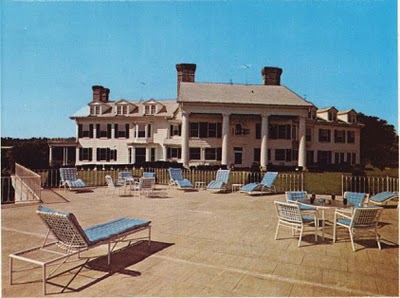 tood on Sands Point, better known in the book as “East Egg.” At 20,000 square feet, the home contained 25 rooms, 10 and a half bathrooms, and 10 fireplaces. It had marble floors and hand-painted wall paper. The equally impressive grounds included a pool and pool house, a guest cottage, and a tennis court. But the grandeur did not last. After years of going on and off the market, Land’s End sold for the last time in 2004 for $17.5 million. If fell into a state of disrepair, and the owner claimed the property was costing him $5,000 a day to maintain. In 2009 the estate was put up for sale once again – the list price was $30 million – but there were no buyers. in 2011, the decision was made; the house would be demolished. The owner had ensured before he bought it that the land could be divided up – and that was the fate for the once grand estate. A piece of history would be replaced by five new, cookie-cutter homes.
I’m not sure why I feel such an attachment to Land’s End. There is something about it, and it’s not even its impressive history. You don’t need to know the story of its past to appreciate its uniqueness. It’s strange – I had a dream one night several months ago that involved a house eerily similar. It was a multistory, white colonial that was also in disrepair. Except in my dream, my extended family owned the property and had just returned for the first time in years. All of the old staff were still there, though – and they were doing their best to spruce the place up. This was of course before I had ever heard of Land’s End – but the similarities still give me pause.
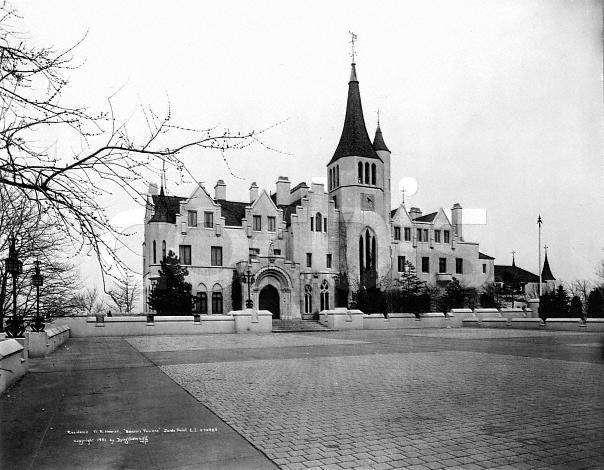
 Another estate from the world of Gatsby met a similar fate. Beacon Towers was thought to be the inspiration for Jay Gatsby’s “West Egg” mansion, even though it was actually located on Sands Point (the inspiration for East Egg). It was completed in 1918, and was later sold to newspaper publisher William Randolph Hearst. Hearst sold the estate in 1942 and it was demolished three years later.
With the original inspirations for Gatsby gone, Baz Luhrmann was forced to rely on photos and to look for his own inspiration for his film. That came from Old Westbury Gardens, an estate built between 1903 and 1906. The 23 room mansion was the basis for a re-envisioned Buchanan residence in the movie. Open to the public since 1959, it currently serves as a museum and as a venue for weddings.
Equal attention to detail, of course, was given to other aspects of the film: interior decor, wardrobe, and music. An article in the Hollywood Reporter mentions that Stickley furniture was used for scenes inside Nick Caraway’s cottage. The furniture company as we know it today was founded in the early 1900’s in Fayetteville, NY outside of Syracuse. Other iconic companies assisted with the making of the film as well. Tiffany and Brooks Brothers, both in business in the 1920’s, dug through their archives to ensure the accuracy of the clothing and accessories used for the actors. Music consisted of original compositions that mimic the period, at times infused with modern touches of hip hop. By far, my favorite piece was “Young and Beautiful” performed by Lana Del Rey.
As the warmer weather approaches, I can envision myself reading the book that started it all – sitting on a beach and looking out over the water for that elusive green light.

 PENT-UP CURIOSITY